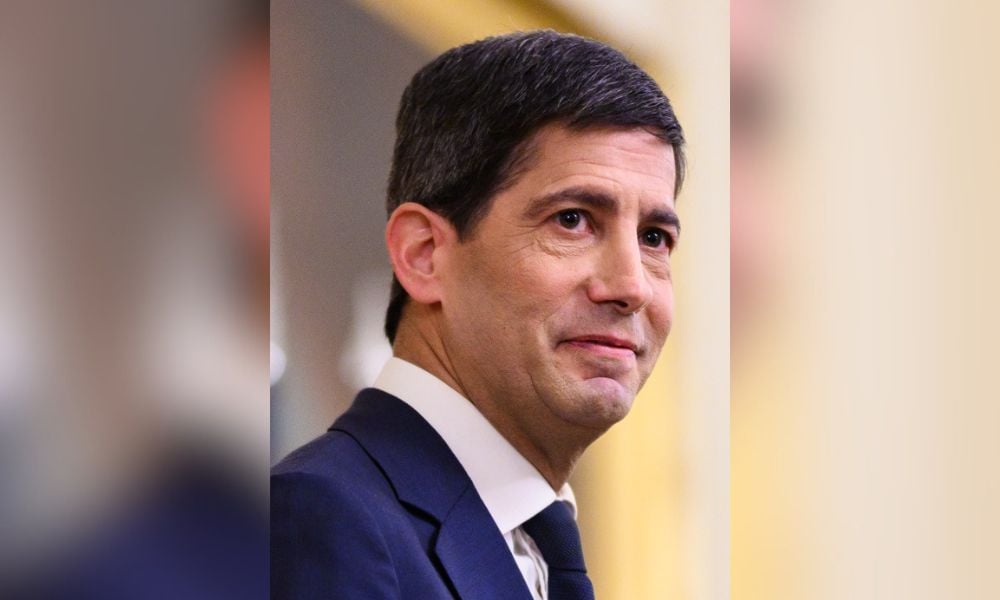
The Federal Reserve kept to its path of keeping its policy rate steady at 3.5% to 3.75% Wednesday in the central bank’s first meeting with Kevin Warsh as chair.
Advisors have been closely watching the Fed’s stance amid pressure from President Donald Trump to lower rates. Warsh, who took office as Fed Chair on May 22, was Trump's nominee for the role. The Fed made three consecutive rate cuts last year but Warsh’s predecessor as Fed Chair Jerome Powell had resisted calls from Trump to cut rates.The Fed made its last rate cut in December 2025.
In a statement, the Federal Open Market Committee said that it approved Wednesday's decision by a 12-0 vote. "Economic activity is expanding at a solid pace despite elevated uncertainty that owes, in part, to the conflict in the Middle East," it added. "Productivity growth and capital investment are strong. Job gains have kept pace with the workforce, and the unemployment rate has changed little."
However, the Committee noted that inflation remains elevated relative to its 2% goal. This, it said, partly reflected supply shocks that have driven price increases in certain sectors, including energy.
In a note released early Wednesday, James Demmert, chief investment officer at Main Street Research, described the Fed meeting as arguably the most important one in recent memory, noting that investors now have to get used to the new Fed Chair's communication style, which is an adjustment period for markets.
Demmert did not expect any change to interest rates at Wednesday's meeting. “Warsh is likely going to take his time and monitor how inflation responds to the recent drop in oil prices,” he said.
However, Demmert added that any stock market volatility caused by Warsh's commentary is a buying opportunity since the market fundamentals remain in place.
The S&P 500 index ended Wednesday's session down 1.2% in the wake of the Fed's latest interest rate decision.
Melissa Cohn, regional vice president of William Raveis Mortgage also noted that the Fed decision to keep rates steady was hardly out of the blue. "With oil prices still high and inflation climbing, there was no room for the Fed to move in either direction," she said, in a note. Cohn added that, while oil prices are declining thanks to the end of the war in Iran, it will take time for inflation pressures to ease, perhaps giving the Fed and its new chairman the opportunity to cut rates later this year.
But the Fed's long-term objective has not changed, even with Warsh at its helm. “Having a new Fed chair has not changed the goal of the Fed, and its dual mandate to bring inflation to the target level of 2% while maintaining maximum employment," said Cohn.
These sentiments are echoed by Katie Klingensmith, chief investment strategist at Edelman Financial Engines. "The announcement today of rates holding steady and the split views from officials regarding rate movement by year-end suggest a clear focus on fighting inflation," she said, in a statement. "Markets have reacted accordingly – fully pricing in a rate hike by year end."

Most firms think they are ready for the ultra high net worth market. Most are not.
Stifel has paid or is on the hook for close to a staggering $200 million in damages and settlements to former clients of Chuck Roberts.

UBS also expanded in the Southeast with six advisors overseeing more than $2 billion, while Osaic lured a $300 million family-led practice from Wells Fargo's FiNet.

The new AI workspace rollout promises to automate the full advisor workflow just as third-party tools wage a turf war for central control of wealth firms' tech stacks.

Mega-RIA picks up $250M advisor, while three firms head for &Partners.
Direct indexing is on pace to outgrow ETFs and mutual funds. Northern Trust's Ken Lassner explains why the advisors who get it wish they had started sooner.
As $84 trillion prepares to change hands, advisors who treat estate planning as peripheral are quietly building a sieve, not a book.